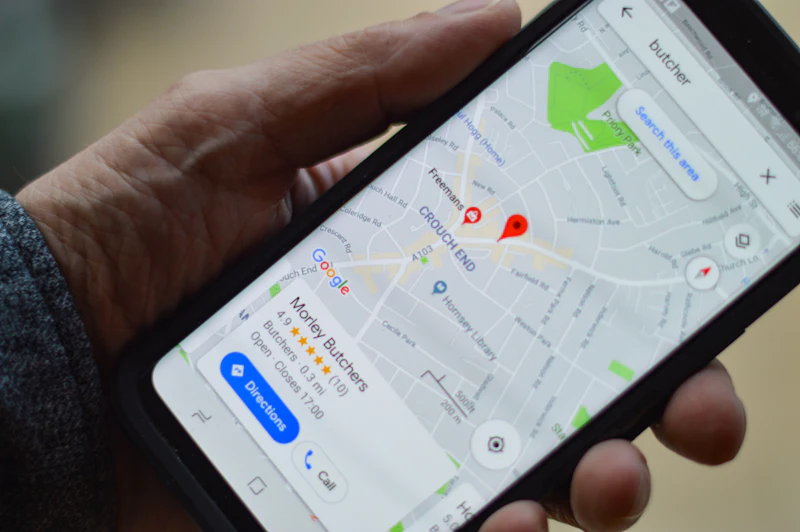
1. People in Fredericton search before they call
Think about the last time you needed a plumber, a groomer, or a contractor. You probably pulled out your phone and searched. Your customers do the same thing, whether they've lived on the Northside for thirty years or just moved to town for a job at UNB.
Google's results lean heavily on businesses with their own websites. Facebook pages can show up, but Google has a hard time reading them, and a lot of what's on them sits behind a login wall. A clear website that says what you do and where you do it gives Google something it can actually understand and rank.
2. "Near me" only works if Google knows where you are
Searches like "snow removal near me" or "cleaners Fredericton" depend on Google matching your business to a place. A website that plainly lists your service area (say, Fredericton, New Maryland, and Hanwell) and links to your Google Business Profile makes that match easy. A Facebook page that mentions your town once in the "About" section doesn't.
3. AI assistants are the new word of mouth
A growing number of people skip the search results entirely and just ask: "Who's a good lawn care company in Fredericton?" They ask ChatGPT, Google's AI answers, Siri, and other assistants.
Those tools build their answers from what they can find and read on the open web. If your business has a website that plainly states who you are, what you offer, and which communities you serve, you give them something to recommend. Without one, you're mostly invisible to them, no matter how good your Facebook reviews are.
4. You don't own your Facebook page
Facebook decides who sees your posts. It has changed the rules many times, and organic reach for business pages has dropped a lot over the years. Accounts get hacked or locked with no one to call. Features come and go.
A website is yours. Your domain name, your words, your phone number front and centre. Social media becomes a way to send people to your website, instead of being the only place they can find you.
5. It makes you look like the real deal
Fair or not, a lot of people quietly check whether a business has a website before they call. A simple, professional site tells them you're established and serious about your work. It's often the difference between getting the call and being skipped for the next result.
6. It answers the same questions so you don't have to
Do you go out to Oromocto? What are your hours? Do you work weekends? How do I reach you? A website answers those questions around the clock, which means fewer back-and-forth messages and more customers who are ready to book.
Not instead of social media. Alongside it.
Keep posting on Facebook and Instagram if it works for you. A website doesn't replace them. It gives everything you do there a permanent, searchable home that you control.
"But I'm busy enough already"
That's great, and it's common in a city where a lot of business still runs on word of mouth. A website isn't only about more work. It's about the right work, in the right parts of town, from customers who already know what you offer before they call. And it protects the business you've built if word of mouth ever slows down or your Facebook page disappears.